January 14th, 2013

The New Complete Olympic Lifting

No Comments

It goes without saying that the Olympic Lifts are a standard part of any respectable strength and conditioning program.

I love them. I wouldn’t consider going into the weight room without teaching them.

But, my background isn’t Olympic Lifting. I can break down sprinting, hurdling and jumping technique all day. But, teaching and fixing athletes in the clean is a work in progress.

So, long story short, we had a DVD created that not only walks you through the process of teaching the Olympic Lifts, but does so in a straight forward, step by step process.

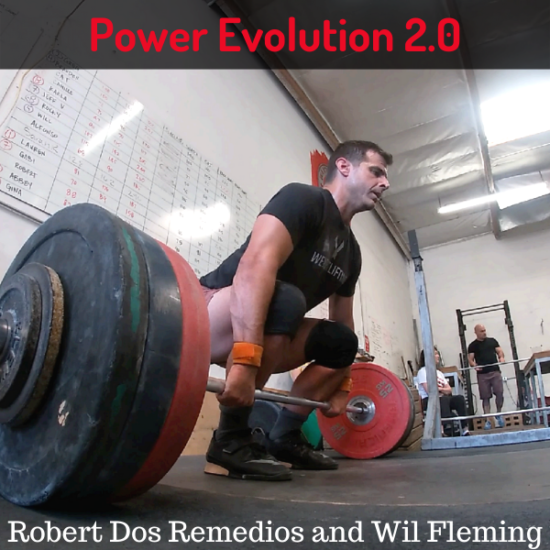
One of the primary people I go to for strength training information is Wil Fleming. Wil is a former US Olympic Trials Qualifier and NCAA All American Thrower from his days at Indiana University, so he is intimately familiar with how these movements transfer over to success in our sport.

What I love about this program is that for every piece of the movement that he teaches, he explains why athletes often do it wrong and gives corrective exercises or cues that will help resolve the problem.

Check out Complete Olympic Lifting

This isn’t about getting a ton of science and background information requiring a fancy scien ce degree. It’s step by step how to teach the Olympic Lifts so your athletes stop catching the bar with their elbows down, jumping forward during the clean because they don’t get full hip extension, pulling on the bar with their arms instead of driving through the hips, landing with their feet spread outside their shoulders…

You get the idea.

If you’re not teaching the Olympic Lifts this DVD will help you get over being intimidated by the process.

If you are teaching the Olympic Lifts, this DVD is guaranteed to add a bunch of new tools to your teaching tool box. Because I know my kids are making mistakes. I see kids at the gym doing them and it’s a hot mess. I see the football players in our school doing them and that’s not going too well. So, chances are, your athletes would perform better if they were better able to do these lifts properly.

Complete Olympic Lifting

Read More

April 24th, 2012

5 Reasons You Need Functional Strength Coach 4.0

No Comments

I was going to give you a long song and dance about why I think you should stop what you’re doing and immediately purchase Mike Boyle’s Functional Strength Coach 4.0.

I thought to myself,

“Yeah, but he’s not a track guy. It’s not ‘event specific’. Track people might not see the value in it so I better give a laundry list of benefits and tap dance around the room use a bunch of fancy words.”

But, I changed my mind. If you’re an information junkie, a lifelong learner and/or one of those people who knows you can never get enough good ideas for your athletes, keep reading.

If you’re not really into paying for good information, that’s cool, but this email isn’t for you.

I was never much of a Boyle fan until I got Functional Strength Coach 3. But, once I got it I realized it covered a lot more than weight room stuff. And I realized I needed to spend more time studying coaches who weren’t track and field people.

And if you look at my program, you’ll see a clear influence from Boyle’s info, especially in my warmups, my mobility work and my weight room exercise selection.

Strength training is an area of relative weakness for me. And there really isn’t much good information on strength training in the world of track and field, especially if you’re not working at the elite levels.

And I am not.

So here is what I think you may learn from Functional Strength Coach 4.0 based on what I learned. If you already have all this mastered, well then I guess you don’t need it. And don’t let the fact that he’s not a ‘track guy’ affect you. In my opinion, that would be a mistake.

1. You probably don’t have the resources to do an FMS (Functional Movement Screen) with all your athletes, but once you watch FSC4 you’ll see that may not be doing a great job of identifying postural and mechanical deficiencies. Or understanding why athletes can’t do certain things no matter how hard they try. And it’ll be hard for you to go back to practice doing the same drills and exercises for your warm up and mobility work. FSC4 will give you ideas on which exercise progressions and regressions you can use to fix many of the issues your kids show up with because, well, we both know they’re not doing athletic development in their other sports.

2. After you see him talk about foam rolling and see how he works it into his programs, it will be hard for you to start a practice without doing it or hear your athletes complain about being sore and not feel guilty that you’re basically ignoring simple stuff that would help improve muscle function.

3. After you see him talk about ankle mobility (and, while we’re at it, hip mobility), you’ll realize that shin splints are largely a function of poor program design and when your kids complain about them, it’s really your fault. FSC4 will help eliminate that curse.

4. After he goes over the ‘joint by joint approach’, you’ll realize that hamstring issues are more about glutes and less about hamstrings, that quad issues are more about hip flexors and less about quads (rectus femoris, more accurately), that knee pain is probably an ankle or hip mobility issue, not a knee issue, that low back pain isn’t about the lower back, but….you get the idea.

FSC4 will show you what you need to add to your program, individually and globally, to, first and foremost, reduce injury and secondarily improve performance.

5. After you watch the strength programming section you’ll realize that most of your athletes should probably be goblet squatting, not back squatting or even front squatting. That you should be doing more single leg work than you’re doing, but that your single leg progressions are probably too complicated for your athletes’ current level of ability (lunges are not a beginner exercise). That you have an imbalance in the amount of hip dominant vs knee dominant work you’re doing. And that you don’t have enough regressions and progressions for each movement pattern you use. But, FSC4 will definitely fix that.

Within all these areas, Boyle shows exactly what he does, why he does it and how he progresses and regresses everything based on ability.

Bottom line:

You will get better results with your track and field athletes after you implement what you learn in Functional Strength Coach 4.0.

So, if you’re in the market for an upgrade to your biomotor programming system/approach, it is a worthwhile investment.

Check out Functional Strength Coach 4.0.

Of course, if you have questions about whether it is a good fit for you, I’ll be glad to answer them.

Functional Strength Coach 4

Good luck!

-Latif Thomas

P.S.  You may be asking, “What’s the difference between Functional Strength Coach 3 and Functional Strength Coach 4?”

Here is what Coach Boyle said:

“The major way FSC4 is different than FSC3 (and 1 and 2) is that it is part of my continued attempt to keep everyone current on what we presently do. The FSC series is really an evolutionary process. I learn and then the viewers learn with me. If you look at my books you see the evolution. You can read one and then the next and not find them repetitive.”

Grab your copy of FSC4 now here -> Mike Boyle’s Functional Strength Coach 4.0.

Read More

February 13th, 2012

Summer Track and Field Clinic

No Comments

2012 Summer Track and Field Camp!

We’re not quite ready to start taking registrations for this summer’s clinic, but I’m getting requests and questions every day so I wanted to at least give you some information so you can schedule vacations, etc. around the clinic.

The dates for this year’s clinic are July 19-22, 2012 at Brown University.

With the overwhelming success of last year’s clinic, we have decided to expand this year’s program. So here are some things that are new this year:

1. We’ve doubled the number of slots for the sprints and hurdles. Last year the clinic sold out almost 6 weeks before it was held and we want to make sure no one gets left out again this year.

So we will offer two sprints or hurdles sessions. One will be Thursday/Friday July 19-20 and the other session will be Saturday/Sunday July 21-22. This gives you the option of choosing the session that best fits your life and/or allows you to register for, say, sprints during the Thursday/Friday session and then jumps during Saturday/Sunday session.

2. We’re adding the throws for the Saturday/Sunday session. We haven’t lined up all of the staff for the shot put, discus and javelin just yet, but you can be assured it will be top notch like with the other events. Case in point: One of our lead throws instructors will be Brown University Director of Men’s and Women’s Track and Field Michelle Eisenreich.

3. We’re adding classroom session for coaches. On Friday night, July 19, we’ll be running seminar style classroom sessions for coaches. This way you can get some insight into the workout planning, philosophies and preparation side of coaching. Then, with that information and insight in hand, you’ll go out to the track sessions to see how we take ‘book information’ and specifically apply it to athletes. I don’t know of any other clinic that offers this (though I’m sure they’ll borrow the idea) and we think it’s going to be pretty cool.

I don’t know who is speaking on what quite yet, but we are certainly open to your feedback and suggestions since this clinic is about you and not about us.

4. We’re adding more staff. Last year I don’t think we had enough coaches covering the sprints. Most of last year’s staff has signed on to return this year, but we’ll be adding even more coaches to ensure low staff to athlete ratios. For starters, one of the best sprints coaches in New England, Wheaton College Men’s and Women’s Head Coach Dave Cusano, will be joining the sprints staff for both sessions.

Now those are the basics for now.

Registration for this summer’s Track & Field Clinic is underway.

As I’ve said there are limited spots in each event group so if you plan to attend, I recommend signing up as soon as possible to reserve your spot.

Hope to see you this summer!

2012 New England Track & Field Clinic

Read More

January 19th, 2012

The Best Strength & Conditioning Resource

No Comments

Believe it or not OnlineBodyByBoyle has been live for over a year now. In the past 14 months the site has evolved into a diverse database of educational content from the best minds in the industry.

When Mike Launched the website back in October 2010, the plan was to create the ultimate source for content from Mike Boyle for those that couldn’t travel to seminars, and for those that
wanted the inside scoop on what they do at Mike Boyle Strength and Conditioning. Instead, it became much more.

In the last year the guys at OnlineBodyByBoyle have posted almost 100 hours of educational video content that covers a wide range of subjects from strength and conditioning, to assessments, to speed training, to rehab, and much more. And this content isn’t just coming from Mike. In the first year they have had talks from Sue Falsone (Athletes Performance/LA Dodgers), Charlie Weingroff, Dan John, Kelly Starret (MobiliyWod), Nick Tumminello, Negar Fonooni, Joe Sansalone, Charles Staley, and more!

The subjects have included, kettlebell training, sandbag training, a talk on the thoracic spine, mobility with bands, rotary training, the FMS, and more.

To put it simply, they have created a library of content that is must watch if you are a fitness enthusiast, trainer, physical therapist, strength coach, or just love strength and conditioning.

The best part is that they now support the iPhone, iPad, and iPod Touch for watching their content.

They also have their exercise database on there along with the same programs that they use with their high school, college, and professional athletes.

Check it out for yourself here:

http://www.OnlineBodyByBoyle.com

Online Body By Boyle gives you the newest approaches and techniques to assist you to get your finest result. If you want better results from your strength and conditioning program, this resource is what you’re looking for.

http://www.OnlineBodyByBoyle.com

Read More

November 18th, 2011

Simple nutrition coaching for your players

No Comments

By Mike Roussell, PhD

Nutrition is a funny thing for your athletes. They don’t pay enough attention to it. You don’t have the time or resources to address it and it could arguable make the biggest impact on their performance. So how can you use the little time you have to talk nutrition and make the biggest impact possible.

Talk actions and behaviors.

Nutritionist love to talk about grams of this, percent calories of that…try telling a 18 year old running back that he needs to eat 1 gram of protein per pound of body weight. It doesn’t work. It isn’t tangible enough for them. So they’ll end up saying ‘okay coach’ going home and continuing doing what they always do. Fortunately breaking the nutrition barrier with your athletes isn’t that tough if you give them specific actions and things to do. Here are 3 simple and actionable things your athletes can do.

Have something right after exercise – A sports drink is good. A sports drink with a little protein is a little better. This is the highest impact single thing they can do. Fortunately sports drinks are easier to find than water in some places so no one should have trouble doing this. Getting in liquid nutrition right away will

Eat Breakfast that contains protein – Many young athletes skip breakfast and then when they do have breakfast, they’ll opt for a bagel or cereals – both less than idea. Have your athletes 1. Eat breakfast and 2. Make sure it has some protein. This will improve the quality of what they are eating (eggs, greek yogurt, etc).

Eat a fruit or vegetable at every meal - If you look at the top 5 sources of calories in the American diet, vegetables are non-existent. Have your athletes commit to eating a fruit or vegetable at every meal. It is a very simple thing for them to do and it will make a big difference in the quality of their diets.

Have you athletes do all three or just get them to do one for a week and then add one more. Simple actionable changes that they can stick to will make a difference and improve their performance.

If this kind of action based approach rings true to you then check out my newly released Peak Diet & Training Design home study course while also grabbing 2.0 NSCA CEUs.

Mike Roussell, PhD
Science Advisory Board: LiveStrong.com
Columnist: Bodybuilding.com, Shape.com

For more information on Mike Roussell and his programs Click Here

Read More