November 18th, 2011

Simple nutrition coaching for your players

No Comments

By Mike Roussell, PhD

Nutrition is a funny thing for your athletes. They don’t pay enough attention to it. You don’t have the time or resources to address it and it could arguable make the biggest impact on their performance. So how can you use the little time you have to talk nutrition and make the biggest impact possible.

Talk actions and behaviors.

Nutritionist love to talk about grams of this, percent calories of that…try telling a 18 year old running back that he needs to eat 1 gram of protein per pound of body weight. It doesn’t work. It isn’t tangible enough for them. So they’ll end up saying ‘okay coach’ going home and continuing doing what they always do. Fortunately breaking the nutrition barrier with your athletes isn’t that tough if you give them specific actions and things to do. Here are 3 simple and actionable things your athletes can do.

Have something right after exercise – A sports drink is good. A sports drink with a little protein is a little better. This is the highest impact single thing they can do. Fortunately sports drinks are easier to find than water in some places so no one should have trouble doing this. Getting in liquid nutrition right away will

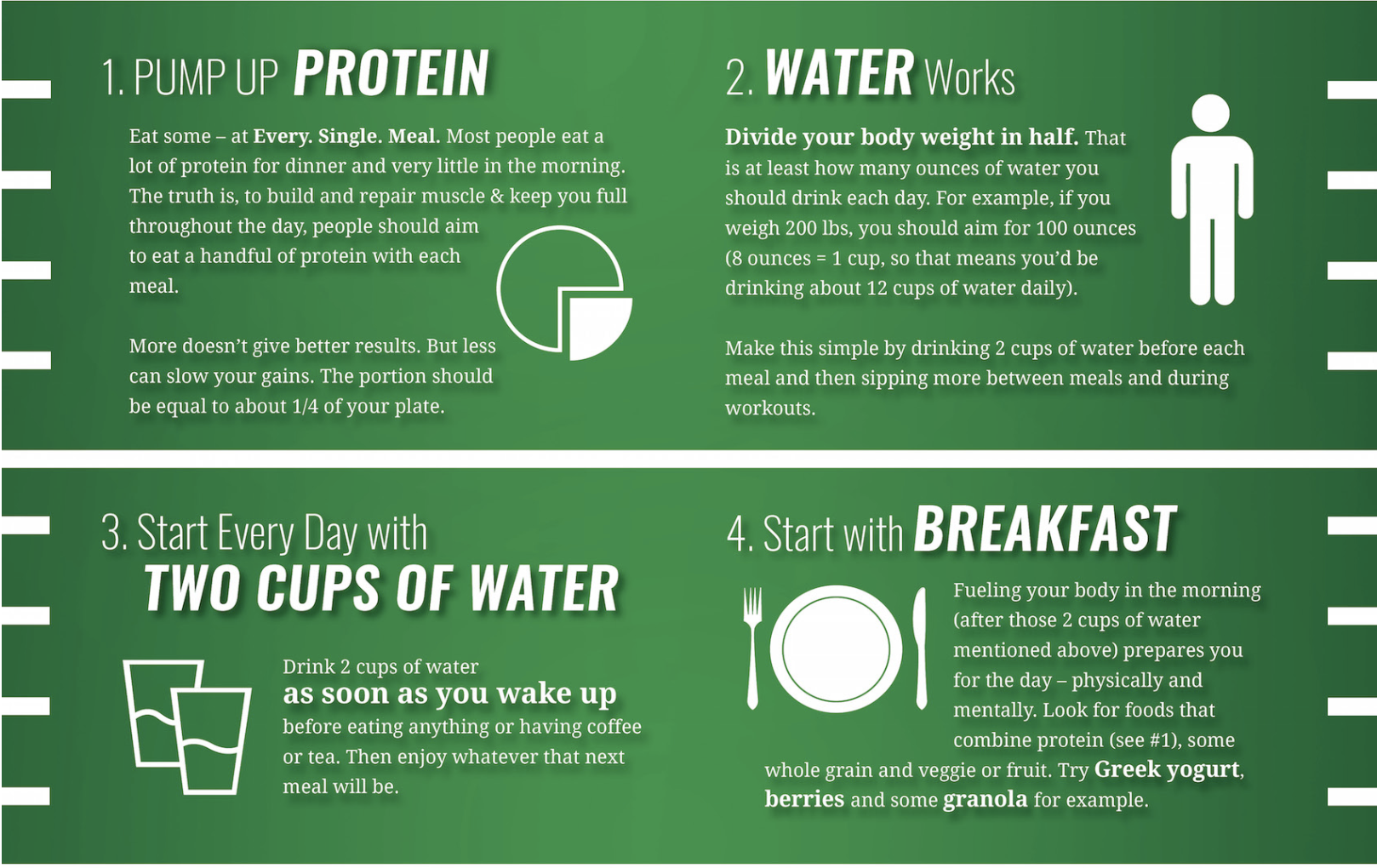
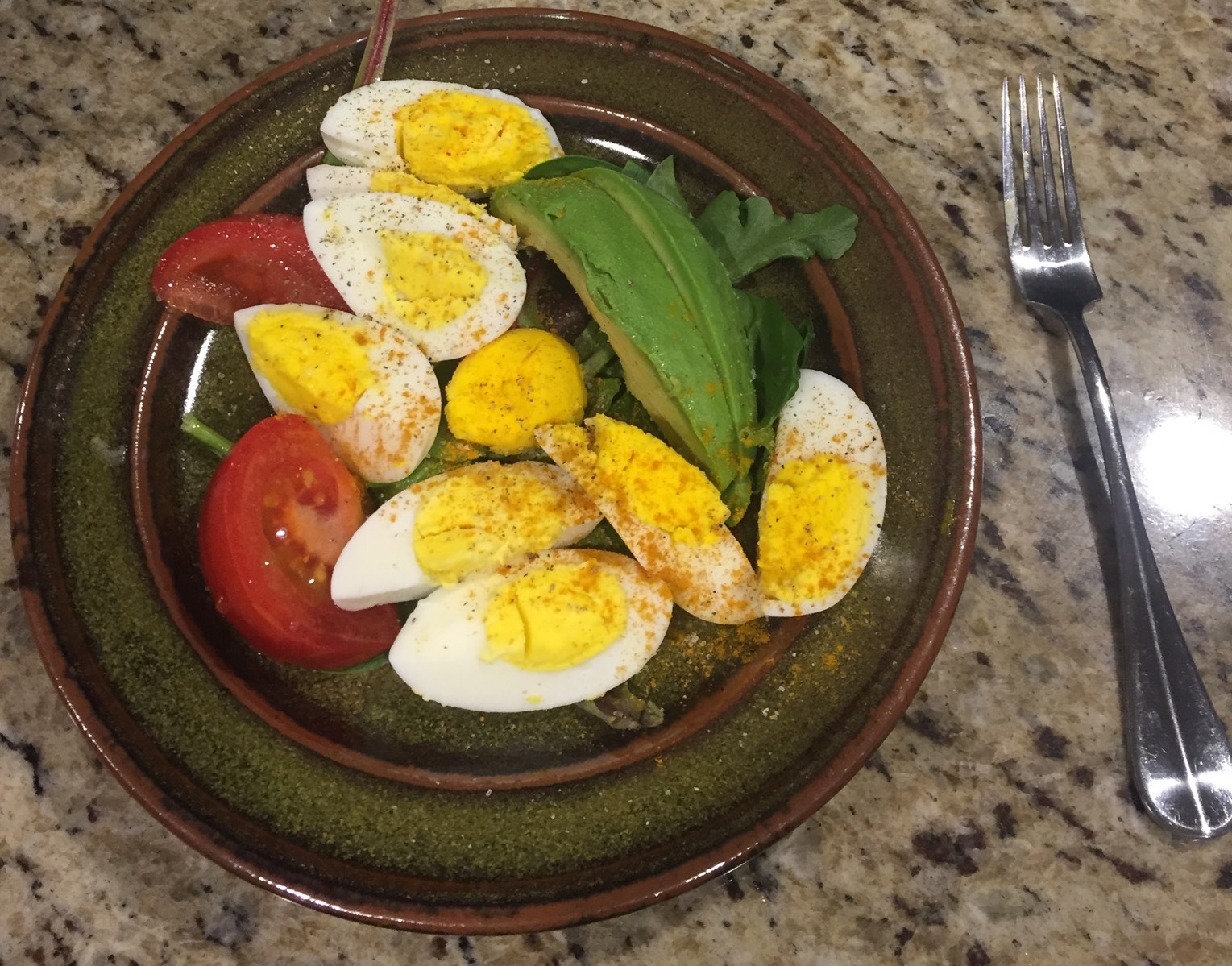
Eat Breakfast that contains protein – Many young athletes skip breakfast and then when they do have breakfast, they’ll opt for a bagel or cereals – both less than idea. Have your athletes 1. Eat breakfast and 2. Make sure it has some protein. This will improve the quality of what they are eating (eggs, greek yogurt, etc).

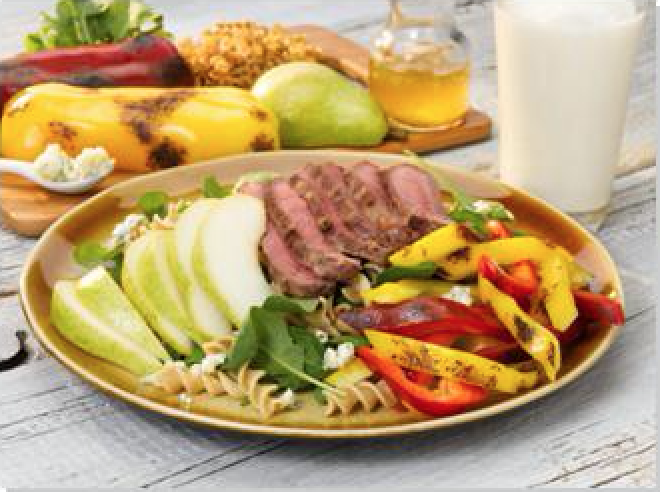
Eat a fruit or vegetable at every meal - If you look at the top 5 sources of calories in the American diet, vegetables are non-existent. Have your athletes commit to eating a fruit or vegetable at every meal. It is a very simple thing for them to do and it will make a big difference in the quality of their diets.

Have you athletes do all three or just get them to do one for a week and then add one more. Simple actionable changes that they can stick to will make a difference and improve their performance.

If this kind of action based approach rings true to you then check out my newly released Peak Diet & Training Design home study course while also grabbing 2.0 NSCA CEUs.

Mike Roussell, PhD
Science Advisory Board: LiveStrong.com
Columnist: Bodybuilding.com, Shape.com

For more information on Mike Roussell and his programs Click Here

Read More

August 13th, 2010

6 Nutrition Questions to Ask Your Athletes

3 Comments

One of the new layers I’m adding to my program this upcoming season is a specific and consistent emphasis on nutrition.

Athletes will eat better if your advice makes sense and is extremely easy for them to figure out.

So I’ll give them some simple handouts and just spot check their progress.

You’ve got enough to do in practice. So it’s worth 5 minutes a day to help your athletes help themselves. Because I’m all about doing what I can to get better performances without having to do extra work.

And the bottom line is, if your athletes:

…drink more water, they’ll be happier and perform better.
…develop consistent sleep habits, they’ll be happier and perform better.
…eat a healthy breakfast, they’ll be happier and perform better.
…eat every 3 hours, they’ll be happier and perform better.
…understand sports supplements, they’ll be safer and perform better.

I think you get the idea.

So I’ll just be blunt. If you don’t want your athletes to shit the bed at the end of practice/workouts/games/meets/races/the season,  then click on this link, read Jeff’s article, then purchase Teen
Sports Nurition Blueprint. It’s what I use, what I’ll continue to use and what I recommend you use.

http://tinyurl.com/6nutritionquestions

To your success,

Latif Thomas

P.S. There are certain programs and resources I strongly believe in. Because they’ll help you. And help your athletes. That’s why I promote them early and often. Teen Sports Nutrition Blueprint is one of them. It will help you and your athletes perform better on *and* off the track or playing field. I know I have to spend a little money to make my athletes better. Of course, you don’t have to. But there’s truth to the saying ‘you get what you pay for’.

http://www.SportsNutritionBlueprint.com

Read More

July 20th, 2010

The best football training program I’ve ever seen.

No Comments


As you may know, I’ve been involved in the release of NFL Head Strength & Conditioning Coach Duane Carlisle’s new program Total Football Training.

We get so many questions from people asking about a comprehensive speed, strength and conditioning program specifically for football players that I’m glad I can finally suggest something that I feel good about.

I’m not going to write a big long story here. But I do recommend go take a look at the program, read the page and watch the video.

Every football player and team needs to be faster, stronger and in better overall shape. People take football so seriously and spend so much playing, watching and coaching it, I can’t see how anyone involved in the sport *wouldn’t* grab this program while they can get the launch price.

Especially when I *know* there are still some high school programs that claim to be serious, but don’t even lift or train for speed before and during the season…

(I know it sounds hard to believe.)

It’s not a perfect program. There’s no such thing. But I know what kind of information, format and structure people want when they invest in a program. Keeping that in mind, it is, without question, the best football training program I’ve ever seen.

To your success,

Latif Thomas

Read More

March 19th, 2010

The truth about sports nutrition

No Comments

By now, I don’t need to explain to you that your athletes’ performance has a pretty low glass ceiling if nutrition isn’t a focus both in and out of practice and competition.

Or that they aren’t going to address this issue with any consistency without your help.

Because when you’re a teenager, fast food and ice cream seems like a pretty good idea.

And it tastes good.

You just can’t take it to the next level when the dollar menu is one of the staples of your diet.

Being a successful coach isn’t *only* about knowing which workouts to run and when, how much to lift or which offensive and defensive schemes best fit your current crop of talent.

(Though it’s not a bad place to start…)

You’ve got to add nutrition to the mix.

Last night I was at our indoor track banquet talking to a group of athletes and nutrition came up.

 My best hurdler, a New England Championships finalist last spring, said:

 ”I used to drink soda every day. Now look what you’ve done to me!”

 …as she holds out an empty bottle of water.

A member of my school record setting (by 2.51 seconds), runner up at All States 4×200m relay team said:

 “You’ve got me eating healthy now. I was eating an apple on the way here and I thought to myself, ‘What am I doing? Why am I eating this?’”

 What’s my point?

This stuff matters. And your athletes will buy into it if you give them easy answers and simple solutions to their nutritional questions.

Mine have. And the results are clear and undeniable.

Now, I’m no expert on sports nutrition.

But I’ve found a resource that allows me to give solid, factual options and ideas to my athletes without having to do a bunch of extra work that I don’t have time for.

 And that is Jeff Cavaliere’s Teen Sports Nutrition Blueprint.

 http://www.sportsnutritionblueprint.com

If I had to dream up a sports nutrition resource that would give me and my athletes everything we need to do and know without adding more than 10 minutes to my day, this would be it.

If you haven’t invested in a copy yet, I highly recommend you do.

Jeff’s launch ends tonight at 11:59pm Pacific time, so if you want to save over 33% on what is, in my opinion, the best sports nutrition resource on the market, you would be wise to grab your copy now.

http://www.sportsnutritionblueprint.com

 To your success,

 Latif Thomas

Read More

February 23rd, 2010

Why Your Athletes’ Nutrition Sucks!

10 Comments

UPDATE: CLICK HERE to register for our Teen Sports Nutrition Webinar scheduled for Tuesday, March 9, 2010!

FACT: One out of three people in the United States is fat. Lack of proper nutrition, education and exercise are the main culprits.

 Actor/screenwriter Kevin Smith got kicked off a plane this week for being too fat. Logic says he should have said to himself:


‘Man, I’m too fat to fly on a plane. Maybe I should eat a salad and go for a walk every once in a while so I don’t get kicked off any more planes because I’m too fat to sit in a seat.”

 Instead he goes on a rampage against the airline, trying to blame them for his addiction to processed meats! Brother, take responsibility for your choices! You *chose* to get fat. Nobody snuck up on you while you were sleeping and injected cheeseburgers into your veins.

So it had me thinking about my athletes. I know I ate like crap when I was in high school. And I still got a Division I scholarship. So just because your athletes appear to be ‘in shape’ doesn’t mean they’re fueling their bodies with quality nutrients.

 I held an open forum with my team where I answered all their questions about nutrition. It consisted of throwers, jumpers, sprinters and distance runners. So it represented a good cross section of athletes whose training demands cover pretty much every sport I can think of.

 Here are the top 3 things I discovered about my (and your) athletes’ nutrition…


 #3: Most of Your Athletes Don’t Eat Breakfast

 The saying ‘Breakfast is the most important meal of the day’ is not a marketing ploy. It’s a fact of reality.

 And your athletes will give you every sorry excuse in the book…

 ’I didn’t know it was that important!’

‘I’m too tired to make breakfast.’

‘I’m not hungry in the morning.’

‘I got up late.’

 Your athletes last ate at maybe 7pm the previous evening and now they’re skipping breakfast. So the space between caloric intake is 15-18 hours. Their bodies are in starvation mode by the time they get something in their systems and their blood sugar levels are in the toilet.

 You spend endless hours writing workouts, designing plays, coaching, traveling, etc.

 And it all goes out the window when your athletes don’t consume enough calories to finish workouts or focus on executing plays or technical movements.

 Nutrition is easily 70% of your athletes’ results and if they don’t even eat breakfast, how far off their best are they falling?

 Want better results? Convince your athletes of the importance of breakfast and give them some healthy options on what they should be eating!


 #2: The Dollar Menu is a Food Group

 Your kids don’t eat breakfast, so they’re starving.

 What’s the easiest solution for HS kids with no real jobs or money?

 $1 double cheeseburgers my friends. And lots of ‘em.

 Half of your athletes eat fast food a solid 3 days per week. What’s most amazing is that your female athletes are often the biggest culprits.

 (Enjoy it now ladies because The Freshman 15 is as real as it gets.)

 The saying ‘You are what you eat’ isn’t a marketing ploy, it’s a fact of reality.

 The cells of your body are constantly being replaced…

 …by whatever it is that you’re eating.

 Eat garbage and your body rebuilds itself with garbage.

 The athletes on my team who get injured most often and stay injured the longest are, without question, the ones with the worst nutrition.

 Parents spend countless hundreds and thousands of dollars on camps, clinics, special coaching, clothing, equipment, travel, physical therapy for their injured athletes, etc.

 Coaches spend just as much in time and preparation, travel, coaching education (OK, that’s probably not true for most coaches), etc.

 Athletes spend countless hours running tough workouts, lifting weights (!), competing, traveling, etc.

 And you’re all wasting your limited time and money when you ignore the fact that nutrition lays the foundation for everything they do in *and* out of practice.

 If you want top performing, injury free athletes, you’ve got to break their addiction to the dollar menu.

 You can’t tell athletes:

 ’I want you to eat breakfast, eat every 2-3 hours, and stop eating fast food.’

 …unless you give them healthy alternatives to eat instead.

 Otherwise, eating right becomes a job and they just won’t do it.

 Remember: contingent rewards (if/then propositions such as: if you start eating healthy, then you’ll run faster) don’t work!!


 #1 Your Athletes Want to Eat Healthy, They Just Don’t Know What to Eat!

 The first part of my Team Nutrition Q&A session was debunking myths:

 - No, coffee is not OK to drink every morning before school

- Yes, you must eat 5-6 times per day

- No, sports drinks are not a substitute for water

- No, fruit juice is not good for you in large quantities

- Yes, if you feel thirsty you’re already dehydrated

- Yes, you’re more likely to get hurt if you don’t eat breakfast

 You get the idea…

 I realized these kids aren’t eating junk because they’re trying to make me cry, they really have NO IDEA what they should be eating.

 As the discussion went on and kids realized what a hot mess their eating habits were *and* how it kept them from performing at a higher level, their questions fundamentally changed.

 Instead, the questions were all based around the idea of:

 ’Well, what should I…

 …eat for breakfast?

…eat for a snack during the day?

…drink instead of juice and Gatorade?

…eat/drink before a competition?

…eat/drink during a competition?

…eat for dinner?

 Once you start giving common sense answers to these questions, you’ll start noticing more water bottles at practice.

 More healthy snacks before practice or on the way to the weight room.

 More kids telling you (proudly) what they ate for breakfast or dinner.

 More kids ratting out their teammates who can’t break their Dollar Menu addiction.

 And most importantly – more kids finishing workouts, performing at a higher level and NOT getting injured.

 Here’s the bottom line:

 Your athletes’ nutrition sucks. Even the good ones.

 You’ve got to coach them in this arena like you coach them on the track or playing fields. Because they want to play better. They want to eat better.

 They just don’t know what to do.

 And you spend too much time and energy being a coach to let half of it go to waste because you think nutrition is someone else’s problem.


If you want to get results, then it’s your job to make this a part of your program. Starting yesterday.

 To your success,

 Latif Thomas

Read More