April 24th, 2012

5 Reasons You Need Functional Strength Coach 4.0

No Comments

I was going to give you a long song and dance about why I think you should stop what you’re doing and immediately purchase Mike Boyle’s Functional Strength Coach 4.0.

I thought to myself,

“Yeah, but he’s not a track guy. It’s not ‘event specific’. Track people might not see the value in it so I better give a laundry list of benefits and tap dance around the room use a bunch of fancy words.”

But, I changed my mind. If you’re an information junkie, a lifelong learner and/or one of those people who knows you can never get enough good ideas for your athletes, keep reading.

If you’re not really into paying for good information, that’s cool, but this email isn’t for you.

I was never much of a Boyle fan until I got Functional Strength Coach 3. But, once I got it I realized it covered a lot more than weight room stuff. And I realized I needed to spend more time studying coaches who weren’t track and field people.

And if you look at my program, you’ll see a clear influence from Boyle’s info, especially in my warmups, my mobility work and my weight room exercise selection.

Strength training is an area of relative weakness for me. And there really isn’t much good information on strength training in the world of track and field, especially if you’re not working at the elite levels.

And I am not.

So here is what I think you may learn from Functional Strength Coach 4.0 based on what I learned. If you already have all this mastered, well then I guess you don’t need it. And don’t let the fact that he’s not a ‘track guy’ affect you. In my opinion, that would be a mistake.

1. You probably don’t have the resources to do an FMS (Functional Movement Screen) with all your athletes, but once you watch FSC4 you’ll see that may not be doing a great job of identifying postural and mechanical deficiencies. Or understanding why athletes can’t do certain things no matter how hard they try. And it’ll be hard for you to go back to practice doing the same drills and exercises for your warm up and mobility work. FSC4 will give you ideas on which exercise progressions and regressions you can use to fix many of the issues your kids show up with because, well, we both know they’re not doing athletic development in their other sports.

2. After you see him talk about foam rolling and see how he works it into his programs, it will be hard for you to start a practice without doing it or hear your athletes complain about being sore and not feel guilty that you’re basically ignoring simple stuff that would help improve muscle function.

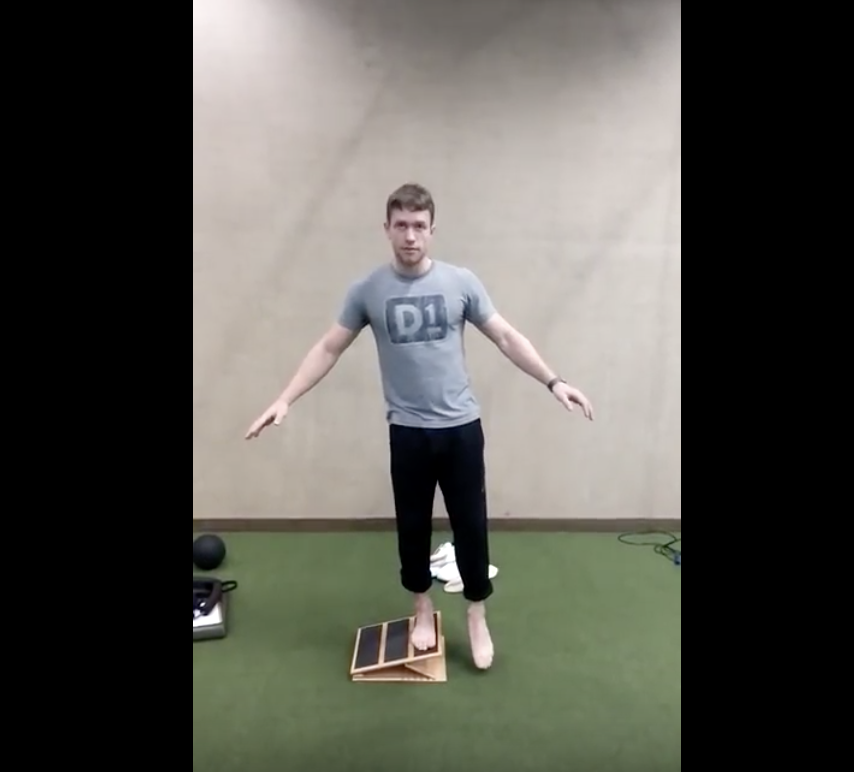
3. After you see him talk about ankle mobility (and, while we’re at it, hip mobility), you’ll realize that shin splints are largely a function of poor program design and when your kids complain about them, it’s really your fault. FSC4 will help eliminate that curse.

4. After he goes over the ‘joint by joint approach’, you’ll realize that hamstring issues are more about glutes and less about hamstrings, that quad issues are more about hip flexors and less about quads (rectus femoris, more accurately), that knee pain is probably an ankle or hip mobility issue, not a knee issue, that low back pain isn’t about the lower back, but….you get the idea.

FSC4 will show you what you need to add to your program, individually and globally, to, first and foremost, reduce injury and secondarily improve performance.

5. After you watch the strength programming section you’ll realize that most of your athletes should probably be goblet squatting, not back squatting or even front squatting. That you should be doing more single leg work than you’re doing, but that your single leg progressions are probably too complicated for your athletes’ current level of ability (lunges are not a beginner exercise). That you have an imbalance in the amount of hip dominant vs knee dominant work you’re doing. And that you don’t have enough regressions and progressions for each movement pattern you use. But, FSC4 will definitely fix that.

Within all these areas, Boyle shows exactly what he does, why he does it and how he progresses and regresses everything based on ability.

Bottom line:

You will get better results with your track and field athletes after you implement what you learn in Functional Strength Coach 4.0.

So, if you’re in the market for an upgrade to your biomotor programming system/approach, it is a worthwhile investment.

Check out Functional Strength Coach 4.0.

Of course, if you have questions about whether it is a good fit for you, I’ll be glad to answer them.

Functional Strength Coach 4

Good luck!

-Latif Thomas

P.S.  You may be asking, “What’s the difference between Functional Strength Coach 3 and Functional Strength Coach 4?”

Here is what Coach Boyle said:

“The major way FSC4 is different than FSC3 (and 1 and 2) is that it is part of my continued attempt to keep everyone current on what we presently do. The FSC series is really an evolutionary process. I learn and then the viewers learn with me. If you look at my books you see the evolution. You can read one and then the next and not find them repetitive.”

Grab your copy of FSC4 now here -> Mike Boyle’s Functional Strength Coach 4.0.

Read More

November 15th, 2011

Hurdle Training Program

No Comments

If you didn’t compete as a hurdler, you probably struggle teaching the event more than you do with the sprints.

OK, I’m talking about myself…

But, even if you were a hurdler, as my mentor told me the day he hired me many moons ago,

“Just because you ran fast doesn’t mean you know how to teach people to run fast.”

Those felt like harsh words when I was 22, but no truer words were ever spoken.

There are a ton of drill based hurdle DVDs out there. And I’ve got a lot of them.

But, as I’ve learned, drills alone aren’t the answer. And there is a fundamental lack of information out there aimed at running a quality hurdle program, especially if you coach at the high school level.

So I decided to fix that problem. Last year I sent a survey to Complete Track and Field readers asking them for their questions about the hurdles. Then I had one of my hurdle mentors, Tony Veney, create a resource that covered all of the topics you want to know about.

So, long story short, here it is – Training the Sprint Hurdler

I’m taking a slightly different approach with this email. I’m not going to give you a thesis on why you should get it. I’m not going to lay out all the features and benefits of the program. The type of coaches who will invest in this resource don’t need it.

You know we put out good information here at Complete Track and Field. Coach Veney’s program is no different.

If you’re the type of coach who likes to learn things, apply them at practice and make track more fun for your athletes, you’ll check it out.

I’ll be basing my hurdles program on it. It’s half price for the rest of the week. It’s digital so you can start watching it in about 3 minutes. And Coach Veney will answer your questions.

Here is Tony Veney’s ‘Hurdling Training Program‘.

To your success,

Latif Thomas

Read More

September 27th, 2011

The right speed & agility program for you

8 Comments

This past summer I had the opportunity to collaborate with the International Youth Conditioning Association (IYCA) in creating their recently released Youth Speed and Agility Specialist (YSAS) Certification Course.

Combining the expertise of myself, Dave Jack and Dr. Toby Brooks, I feel confident saying that the final result is the definitive coaching resource on developing speed and agility in youth (6-18) field and court sport athletes.

Why?

Because the three of us catered to our strengths. Dr. Brooks brought his sport science background and drafted the most impressive text I’ve seen on the theory and methodology of teaching speed and agility to kids.

Dave Jack, an advisor to Reebok and Boston Celtic Paul Pierce’s Truth on Health Foundation, brings his wealth of knowledge in the areas of multidirectional speed and agility.

And, of course, I demonstrate my most up-to-date progressions for teaching linear speed.

(Become a Youth Speed & Agility Specialist today.)

As you research possible speed and agility programs to invest in, you may be wondering which program is a better fit for your personal needs: my Complete Speed Training (CST) program or the YSAS Course.

So here is my opinion:

If you coach athletes competing in team (field & court) sports like football, soccer, basketball, lacrosse, etc., you will get more bang for your buck with the YSAS course than you will with CST.

CST is very drill dominant. So it does have a larger overall inventory of drills and exercises in terms of showing you the actual things you’ll specifically use to make up your training sessions. And it does a great job of explaining how to teach and cue those drills so your athletes do them right.

I think that is where CST is very strong and why it continues to be one of the most popular speed training programs on the market.

The YSAS course, on the other hand, is very skill and progression dominant. Instead of just showing you all the drills you can use, we actually show you how we teach these skills and progressions to real athletes in a training situation.

(For example, I had never met the athlete I workwith in the course *and* he is a wrestler so ’speed’ isn’t a skill he has developed. So we didn’t stage the filming to work with top tier athletes.)

And I think this is a more effective way for you to learn how to progress/regress, modify and evolve the way you run your practices.

Here is a perfect example of why I think you will see the greatest benefits with the YSAS course:

In the agility DVD of CST, I teach that skill using primarily agility ladder drills and cone drills. There is nothing wrong with using these techniques, but as you learned from our teleseminar, these drills should supplement the skills we teach, not serve as the skills.

So I don’t think CST does a stellar job teaching the multidirectional component of speed.

On the other hand, in the YSAS course, Dave Jack bases all his instruction on the teaching of skill sets, progressions and regressions. He teaches you the general and specific movement patterns that generally and specifically apply to general and specific situations that field and court sport athletes of all ages will face in competitive situations.

He does an awesome job. Personally, I think he steals the show, though Dr. Brooks wrote a fascinating and detailed manual that you’ll learn a lot from.

Simply put, CST was filmed in the summer of 2004. YSAS was filmed in the summer of 2011. Here in 2011, the combination of myself, Dave Jack and Dr. Brooks flat out know a lot more than just I did back then.

Plus, I’d bet the farm that 2011 Latif would severely outcoach 2004 Latif.

And for that reason alone, I recommend the YSAS course over CST. I believe you will provide a better experience and help your athletes achieve the best results with this program.

I hope I’ve given you an honest, objective assessment of the two programs so you can make an informed decision.

When you’re ready to become a better speed coach, invest in the IYCA Youth Speed & Agility Specialist Certification Course.

To your success,

Latif Thomas

Read More

January 25th, 2011

High School Strength & Conditioning Certification (Now Available)

16 Comments

I work primarily at the high school level. And I’m a firm believer in the idea that every high school coach, regardless of sport, should be certified by a reputable organization.

Because, the truth is, 8 out of 10 high school coaches could not pass a basic strength and conditioning test. And I’ve worked with quite a few of them.

You know who I mean. That angry, incompetent and morbidly obese dude that clearly hates kids (and Christmas), but has nothing else to do after school except torment some teenagers.

We need to get these people out of coaching. And being really good at what we do is the only way to drive these people into coaching extinction.

Not to mention the fact that these types of ‘coaches’ are the reason your athletes feel compelled to seek outside coaching when they’re competing in a season they’re not with you.

(If you’re one of those ‘outside the school’ trainers, this is another reason to look into this certification…)

And if you’re both equally uncertified, it’s hard for you to tell a kid not to go to that ‘personal trainer’.

If we, as New Breed Coaches, are going to drive the bad coaches into retirement, we have to be the change we want to see in others.

That starts with educating ourselves and then our athletes.

Not only will they work harder for you, but they’ll get better results, have more fun, and, most importantly, stay injury free.

If you agree with what I’m saying, you should take a serious look at this HS Strength & Conditioning Certification from the International Youth Conditioning Association (IYCA):

http://www.athletesacceleration.com/highschool

I know that certifications aren’t the ‘end all, be all’ of whether or not we’re good coaches.

But I know the guys and the organization who created this one.

They’re smart people who care about our industry and care about kids. And if you study their information, you’ll become a better coach.

And that serves the greater good. It helps you. It helps kids. It helps your sport. It helps our industry. Check it out:

http://www.athletesacceleration.com/highschool

To your success,

Latif Thomas

3 Reasons to Follow Me on Twitter:  http://twitter.com/latif_thomas

1. I share info there that I don’t put in my standard emails & blog posts.

2. You’ll get my uncensored thoughts & opinions on every topic anyone would consider interesting.

3. There are no other speed, strength & conditioning coaches saying anything funny, so experience priceless Latif comedy that can only be contained by Twitter servers.

Read More

January 23rd, 2011

Training High School Athletes

16 Comments

If you train athletes, especially at the high school level, you do not want to miss this.

Effective training systems are about taking what you’ve got, understanding the realities, knowing what’s best and then turning out what makes the most sense for your situation. And the key to understanding how to effectively train high school athletes may not be what you think.

The IYCA’s own coaches Eric Cressey, Mike Robertson, Brian Grasso & Wil Fleming got on a call recently and covered their step by step system for training high school athletes. They ran this exclusive teleseminar last week and I thought that you would greatly benefit from it.

The content they covered was great but they only sent it out to their members. So, I had to convince Brian Grasso to send me the recording so I could share it with you (thanks again Grasso!). I hope you enjoy.

Click the play button below to learn more about high school strength and conditioning…


If you’re like me and would rather read then listen, I have included the transcription of the teleseminar for you – Click Here to Download the Transcript (PDF) or Click Here for the Word Document Transcription

Please leave your comments below and let me know what you think.

To your success,

Latif Thomas

P.S. If you know what’s good for you, you’ll follow me on Twitter:

http://twitter.com/latif_thomas

Read More